“You should be able to survive on your own.” –Dek, Predator Badlands, 20th Century Studios, 2025
NAB is the place to uncover the latest technology and applications for film/video pros and enthusiasts. We’ve attended for years, but this year, we noticed an evolution of sorts, which seems to reflect what is happening in the industry in general. Our quick assessment from this year:
- There were a lot more younger folks hungry to learn the ins and outs, the basics of how to create audience-grabbing video stories.
- Everything was trending to 8K and higher.
- People were more concerned about where their content was at and the rising cost of ultra–high–speed storage.
- Oh, yeah, AI was everywhere.
Yes, things seemed different. The crowd was younger and not just because we’re older (although we are); rather, it seemed to be due to an increasing number of short–form creators wanting to learn/apply advanced production/post technology to create higher-quality content to attract more online viewers as well as expand into the streaming show/movie market. Almost every device we own captures high–res images—phone, webcam, doorbell camera—so people expect to see their video content in the highest quality.
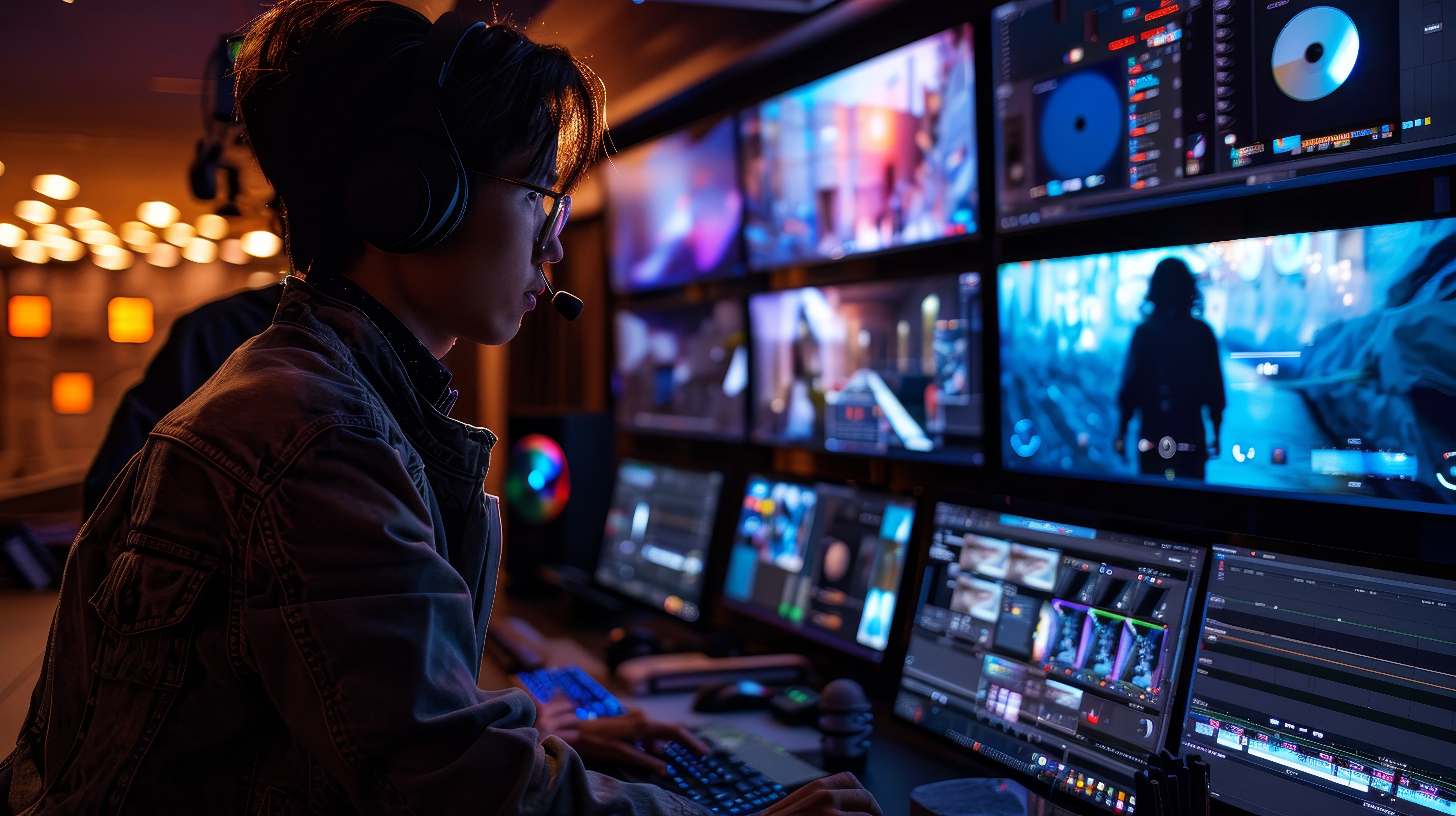
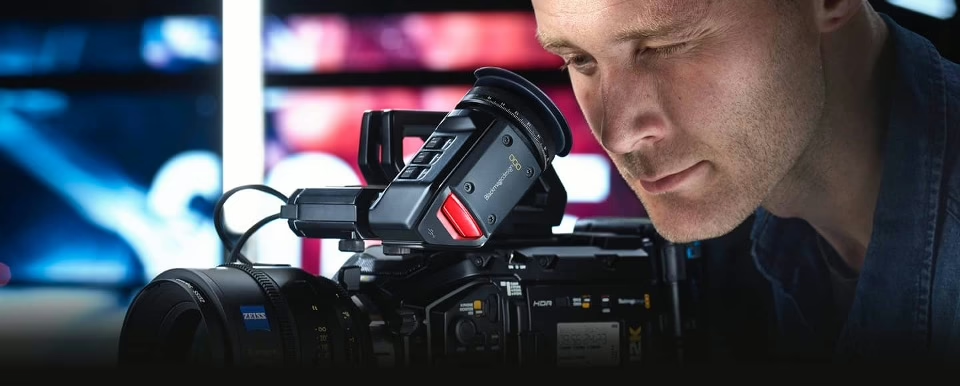
According to Ampere Analytics, more than 45 percent of Gen Z/Millennials watch social videos and micro–series on 4K HDR screens. While projects like 28 Years Later used multiple iPhone 15 Pro Max units, we met a number of creators in the Blackmagic booth checking out the latest in compact, large-format 8K and 12K cameras. The higher-resolution (and economic) cameras have become increasingly popular, according to industry analysts who report that formats have increased more than 30 percent this past year because of the growing demand for high–quality content across all platforms, including social media and streaming services. Filmmakers and content creators today use 8K cameras and monitors for capturing and editing high–quality footage, which enables them to create detailed content and offer greater flexibility in their postproduction.
It’s estimated that there are over 200M creators in the world today, but less than five percent do it as a “profession” and are capable of producing high–quality studio–level content and have built a sustainable business. But it’s still a $2T arena that entices folks to produce content for YouTube, TikTok and the other social media outlets.
We’re pretty sure a lot of the creators we saw at NAB also harbor the goal of duplicating Mark Fischbach’s (YouTube content creator – Markiplier) success. A few months ago, he had his self–produced/distributed film Iron Lung in theaters and racked up $17M domestically on its opening weekend. He probably had seats in seats from his 38M subscribers, but he helped prove people will come back to theaters, ended up with 50 percent of the ticket sales and proved that even content creators can produce a feature people want to see.
We’re pretty sure a lot of the creators we saw at NAB also harbor the goal of duplicating Mark Fischbach’s (YouTube content creator – Markiplier) success.
A few months ago, he had his self–produced/distributed film Iron Lung in theaters and racked up $17M domestically on its opening weekend. He probably had assistance with seats in seats from his 38M subscribers, but he helped prove that people will come back to theaters, ended up with 50 percent of the ticket sales and proved that even content creators can produce a feature people want to see. Yes, there are opportunities for content creators and indie filmmakers to make their mark in the industry.
Even though TV manufacturers announced they’re halting 8K screen production – lack of consumer demand, high cost, lack of content – content creators are still shooting in 8K and 12K because they provide excellent post–production flexibility, superior down sampling, enhanced detail and VFX and consistent field of view. We also like it because we’ve spent much of our career in the storage industry and 8K and 12K require more storage capacity. Of course, 4K (4096 x 2160) is no slouch when it comes to devouring storage capacity – SSD or HD – creating 1,697 Mps or 764 GB/hour of 4K footage.
A single movie production often shoots 100 hours of footage or 76 TB of 4K ProRes 444 QX content, and to do HDR right, you need at least 4K video. A single minute of a ProRes UHD file (3840×2160) is about 5.3 GB; and in today’s digital video world, camera folks tend to keep shooting at the higher data rates because reshoots are terrifically expensive. One hour of standard-definition DV footage requires about 12.7 GB of storage compared to one hour of RAW 4K content, which requires close to 110 GB of storage. And when you’re shooting, say, an hour of 8K RAW footage, you can easily exceed 7 TB (121.5 GB/minute) of content, since 1 TB of storage will provide only about 48–50 minutes of recording time.
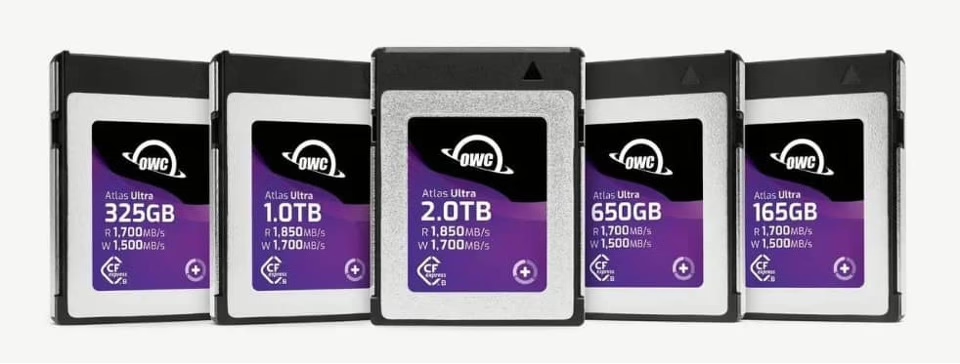
They needed tuned NVMe SSD for the speed, low-latency HD for capacity, and they’re paying top dollar for all of the specialized AI storage chips and spinning drives Seagate, WD, Toshiba, Samsung, Hynix, Micron will send them. So, it’s pretty easy to see why we’re happy with the trend to capture content with the highest resolution possible, and yes, it does significantly improve the color resolution and sharpness.
It turns out, all of those AI data centers that are being built around the globe have a real hunger for specially manufactured, really fast storage devices – SSD and HD. Of course, that meant two things – they shifted most of their manufacturing to the unique/profitable storage devices, and the ROW (rest of the world), computer manufacturers/users and the complete video entertainment industry can expect to pay more for their specialized but different storage devices. The only problem is demand for more, better, and higher–quality videos, shows and movies has declined. It’s the old demand/supply reset. It isn’t temporary, and it’s resulting in higher costs for quality system–level performance devices that video story creators/producers need.
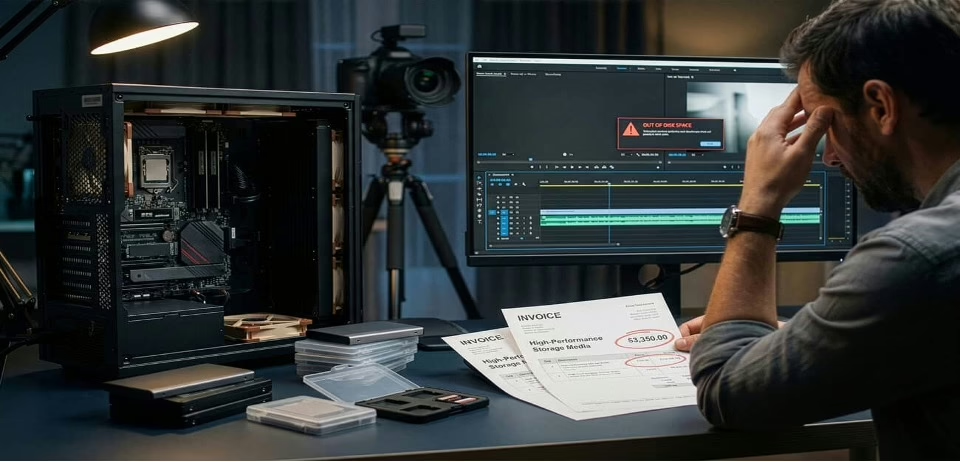
And yes, not all SSD drives perform at their manufacturer listed speed when working with large video files. That’s just one reason a DIT (digital imaging tech) is absolutely necessary for video/film production, even when the volume of production is a few short videos a month and that’s just you. Managing content storage is too vital to be left to luck.
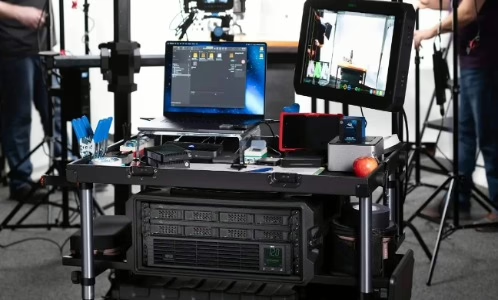
Whether it’s a small or large video project, the DIT and his systems are responsible for the cameras, digital output and handling of content from the cameras through post–production, ensuring every frame of the footage is off-loaded, graded and uploaded to higher-capacity storage. At times, it seems as though the DIT and DIT cart are the pivotal point of a short/long video’s budget (time/money) because as video quality/value grows, so do the storage requirements.
It is surprising how much data 4K, 8K or 12K video can create in a few minutes, and whether you’re producing a 30/60 sec spot or a two–hour movie, every frame needs to be reliably captured, stored and preserved because do–overs are often expensive/impossible.
Years ago, an indie female filmmaker spelled out to us the various steps smart creators and production teams follow to store/protect their video/film content:
- Original media exactly as shot (RAW)
- Protection clone (never touched)
- Worker copy (files renamed, organized)
- Protection copy of worker
- Studio copy of worker
- 3rd clone of worker for safety
- Output of project
- Clone and 2nd protection
- Archive
Any lost footage means a lost day of work, and some work can never be redone/reproduced.
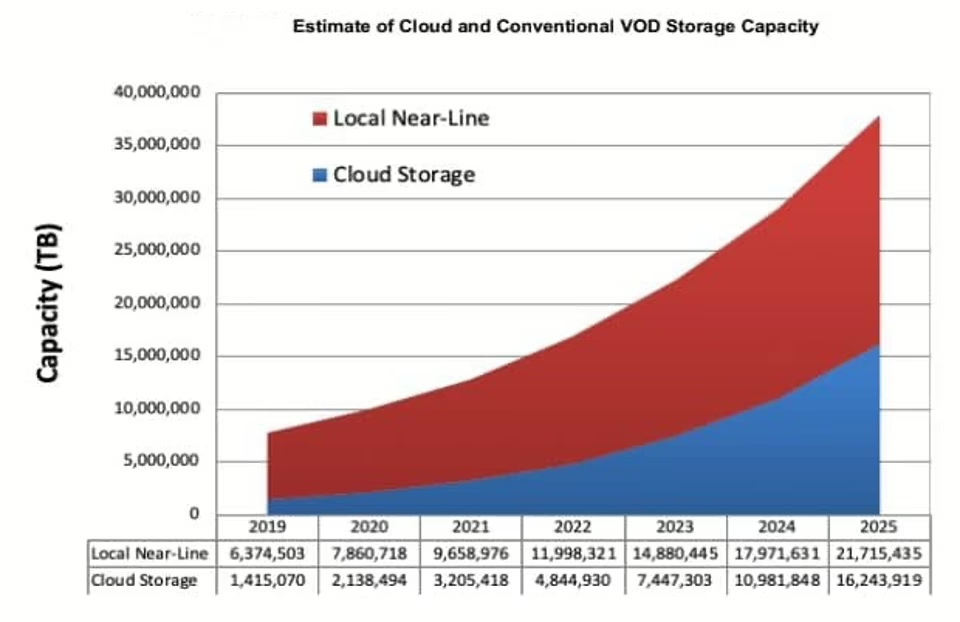
The one thing we noticed while chatting with video production folks at NAB was the increased interest in keeping all of their work and workflow local rather than relying on someone’s cloud to work on video stories, store the creative work and protect it. It wasn’t just because of the rising cost of cloud storage as the data volume grows – yes, that was important, but…. A more overriding concern was the hunger that AI and AI data centers have to feed the technology and use the data as its own to “learn,” modify and use as its own.
Don’t get us wrong, we’re not a luddite when it comes to AI, because nearly every manufacturer at NAB has put the technology to very efficient and effective use including cameras, workflow and unbelievable production and post–production tools. One of the best applications we saw at the show melded AI with a comprehensive and very effective local workflow and storage solution. The key is to blend traditional, on–set filming with a computer–generated virtual environment, AI enhancements to blend pre–production, production and post–production into a fluid, secure and reliable pipeline.
For decades, video production has been around control – large crews, planned shoots, perfect lighting, long timelines and highly polished output. The model is still in place and works well, but there is a structural shift that optimizes relevance, speed trust and repeatability that enables large and small teams to create and deliver breathtaking content.
The post–production team is still essential when products like Adobe Premiere Pro and Blackmagic Design DaVinci Resolve are used, because the AI–enabled tools remove repetitive tasks like syncing audio, cleaning dialog and applying basic color grading so editors can focus on editing, grading, sound and VFX that deliver the professional content project. Just the bottlenecks have been removed so team members can work on the project locally and remotely, cutting/reviewing cuts, adding notes/enhancements and producing a short or long video project more efficiently and effectively.
The Strata VFS (virtual file system) was built around local storage that enables remote editing and peer–to–peer collaboration using ProRes files to conserve bandwidth and ensure quality and content integrity and security throughout the production process, regardless of the size of the project… social media short, show or movie. Even indie filmmakers (and perhaps they’re even more particular about their content storage) prefer NAS (network–attached storage) RAID (redundant array of independent disks) solutions.
The professional storage solutions provide an extra layer of content protection and speed, delivering data transfer speeds up to 110 MB/sec (Ethernet’s limitation) and redundancy that ensures no frames are lost because the data is spread across multiple high–capacity, high–speed drives.
The creative content industry has been in a fog for the past few years with a massive shift in workload and workflow as folks in the industry work to adjust to the new “normal.” Theatrical demand is the lowest it has been since 2010, but there are sound indications that things will change as we adjust to new opportunities. Film and show production is increasing as theaters, studios and streamers develop a clearer idea of project positioning. In addition, stronger, coordinated word of mouth is breaking through the noise as industry folks understand that they need to more accurately deliver a clear promise to a specific audience and give them a real reason to put their seats in seats and/or turn on their home sets.
And increasingly, AI is playing a more vital role in helping producers and creators analyze and understand audience data so they can do an even better job of managing and improving the content creation workflow and collaborate in new ways, in real time, regardless of where they are located.
Studio and streaming executives – due in no small part to increased industry consolidation – are developing a more intelligent balance between theatrical releases and streaming based on not just the content but an enhanced, more in-depth understanding of the viewer and her/his entertainment wants and needs. In addition, the more intelligent tools are enabling creatives at every level to deliver an interesting and audience-satisfying experience, whether it’s a social media video, show or movie… something that is concise, entertaining and, most important, keeps them coming back for more again and again.
That always makes us feel better– – not only because we find the new depth and breadth of video stories more enjoyable –– but also because it is more real. Creative people will be involved, and they’ll continue to expand their localized video content storage as they manage costs and improve efficiency. And the great thing for video content consumers is they’ll be able to enjoy great films, shows and video short stories from creatives around the world.
NAB always gives us an opportunity to see the latest and next great creative tools – hardware and software – that will keep the video content pipeline filled by talented and committed folks around the globe. The beauty of it is storage needs are always expanding, especially as the industry expands its production of 8K, 12K and even 16K content to deliver films, shows and videos with breathtaking clarity that makes people feel as though they are right in the scene.
With the tools that are available, combined with creative talent, we’re pretty sure we can agree with a strong degree of confidence with Dek when, in Predator Badlands, he said, “You should be able to survive on your own.”
YOU LIKE THIS KIND OF STUFF? WE HAVE LOTS MORE. TELL YOUR FRIENDS, WE LOVE MEETING NEW PEOPLE.