During a pre-brief for Siggraph 2026, Rev Lebaredian, VP of physical AI simulation at Nvidia, stated what should be well-known to the industry: that computer graphics is very important to Nvidia, and always has been. History backs up that statement, as the company has been attending Siggraph for going on three decades, bolstering itself as a computer graphics company. And while today the company carries the title of a leading AI company, Lebaredian emphasizes that even during this age of AI, the conference is more important than ever—to Nvidia and CG.
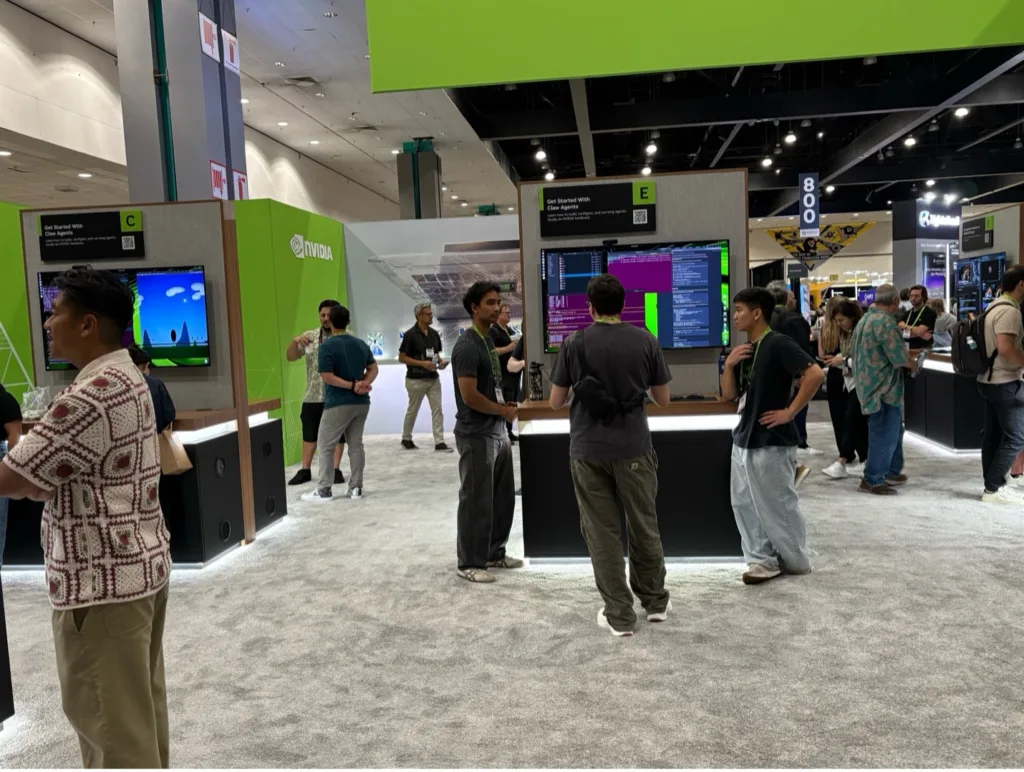
It was difficult not to encounter something “”Nvidia” at Siggraph 2026. Its presence was widespread both on and off the exhibitor floor, as it hosted three days of sessions, workshops, labs, and tutorials. Indeed, the company came ready to show its latest technologies and how they can benefit CG creators as they step into the next phase of computer graphics: using AI to advance their workflows. A group from Nvidia Research and Engineering discussed developments in neural rendering, world models, and simulation at a sponsored keynote. The company also hosted a “Build-a-Claw,” a hands-on event where participants could customize and deploy AI agents using OpenClaw and NemoClaw technologies, and a hands-on developer hackathon, where developers and creators could collaborate and discuss groundbreaking AI and graphics projects.
Nvidia made a handful of announcements at the show, supplementing those with demonstrations and details of other recent technologies. One such bit of news is that its NemoClaw now runs deskside on the DGX Station, opening up a pathway to having super agents run locally. Also, as creative apps more and more become agent-ready, Nvidia now is enabling users to implement this type of hybrid workflow locally on the same RTX Pro workstations they currently use or on DGX Spark or DGX Station systems. The company also said it had made Omniverse fully disaggregated and open source with Omniverse libraries becoming agent tools, making it easy to integrate the tech into existing applications for building sim-ready worlds inside existing 3D applications.
The company also announced the Synthetic Video Detector NIM microservice, bringing an AI-assisted detection signal into editorial and media workflows, and presented papers on new tech including MotionBricks and ArtiFixer.