Looking Glass, known for its holographic and light field display technologies, has applied its technical expertise to the consumer market with a unique take on the digital picture frame. The company’s musubi quickly and automatically converts a 2D image or flat video into a hologram that’s displayed within the device’s 7-inch (diagonal) frame. Musubi will be shipping in June 2026 for $149.
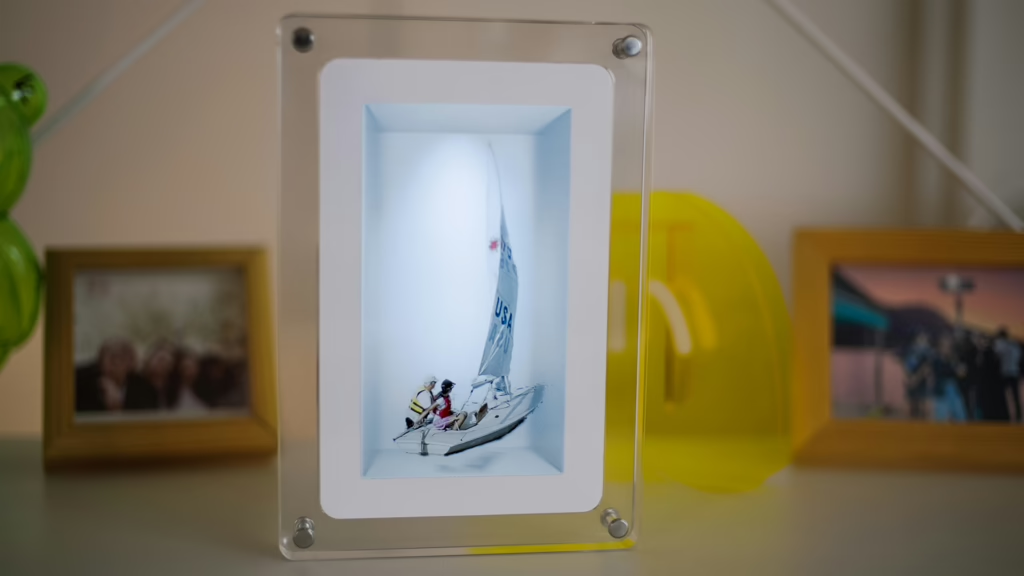
Take a look inside just about any home and you will find a photo print of a loved one or cherished memory proudly displayed in a non-descript frame. With the rise of digital photography, however, came a more modern replacement: digital picture frames that could display not just one photo but a slideshow that changed at user-determined intervals. Now, the photo frame has evolved once again, as Looking Glass soon will be shipping musubi, a personal holographic photo and video frame that uses a new machine-learning algorithm to construct a fully 3D scene from flat media.
Built for consumers, musubi works in much the same way as the typical digital photo frame does. It does not require any special technology or technical knowledge on the front end—a person connects the file to their computer and loads their image file. It then appears as a holographic moment that looks as if it is floating within the display.
On the backend, however, is a different story; that is where Looking Glass’ holographic and light field display experience comes into play. Musubi uses Looking Glass’ Hololuminescent Display technology originally developed for large-scale holographic digital signage, as well as advanced image processing techniques. Users do not need any specialized 3D equipment or even a Wi-Fi setup to operate the picture frame—a free desktop app for the Mac and PC converts photos and videos into holographic files using AI-powered Gaussian splat technology, and then transfers them to the frame via USB-C. The company says the conversion process takes a few seconds and occurs at the press of a button.
According to Looking Glass, the 7-inch-diagonal frame can hold up to 1,000 converted images or video clips of up to 30 seconds each. Users have the option to retain or remove the backgrounds from their images in the display. Currently, musubi operates in portrait mode. Users can upload images of any aspect ratio, but the content will be exported from the app at 9:16 ratio.
The device has a built-in rechargeable battery that lasts 3 hours; also included is a wall adapter for continuous use. The device additionally has a 5 W built-in speaker for video sound.
Musubi will begin shipping in June 2026 for $149. Those pre-ordering during the first 24 hours of the company’s Kickstarter campaign, which began today, can order the device for $99.
LIKE WHAT YOU’RE READING? INTRODUCE US TO YOUR FRIENDS AND COLLEAGUES.