3D streaming infrastructure provider Miris today announced the launch of a public beta for its new 3D asset streaming platform. Miris is building the infrastructure to deliver 3D at internet scale. As a managed service, 3D content owners can upload a 3D asset to Miris, enabling them to stream that asset to any device, instantly and at high-fidelity, at costs comparable to video. This unlocks a wide range of use cases from retail product configurators, architectural visualization, digital twins, and interactive retail, among other use cases.
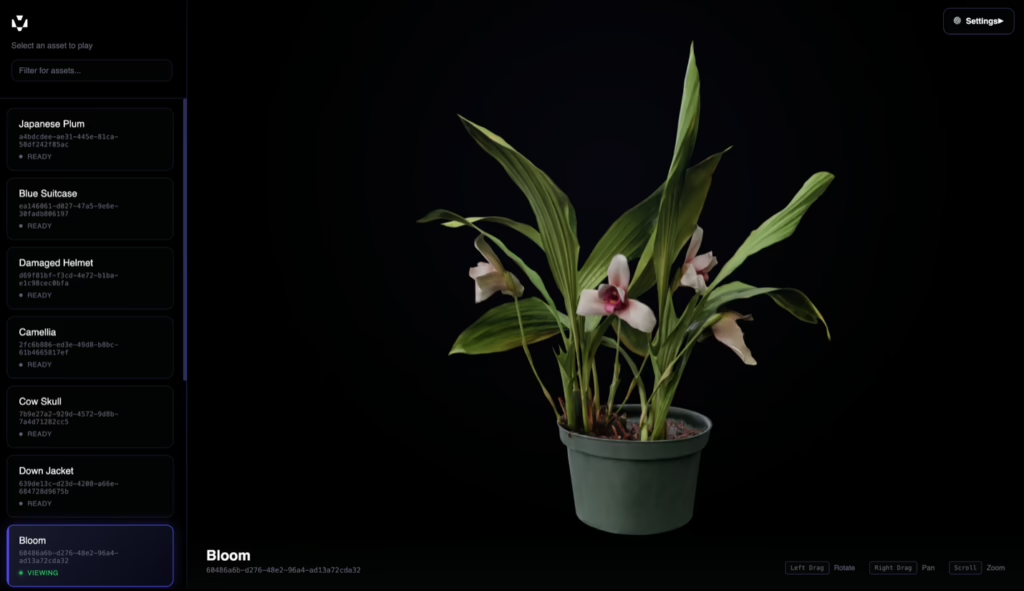
Today, 3D asset delivery is typically handled one of two ways: pixel streaming or via download. Pixel streaming achieves high fidelity but requires GPU infrastructure on a per-user basis, which can become costly at scale and is limited by GPU availability. Downloads, while more economical, generally require asset compression or can be take a long time to load.
Start-up Miris is launching a new option for 3D asset streaming that is not constrained by speed, cost, fidelity, or scale. The platform is entering public beta next week, and developers can request access now.
How it works
Miris accepts 3D assets in OpenUSD format and preconditions the assets through an optimization process with AI and ML using GPUs. Developers load Miris assets into their applications via the company’s Web SDK. Miris uses adaptive spatial streaming to deliver assets quickly and at scale on demand. It only transmits the geometric and texture data in view and adapts to network conditions, enabling it to keep assets responsive and detailed while minimizing memory requirements.
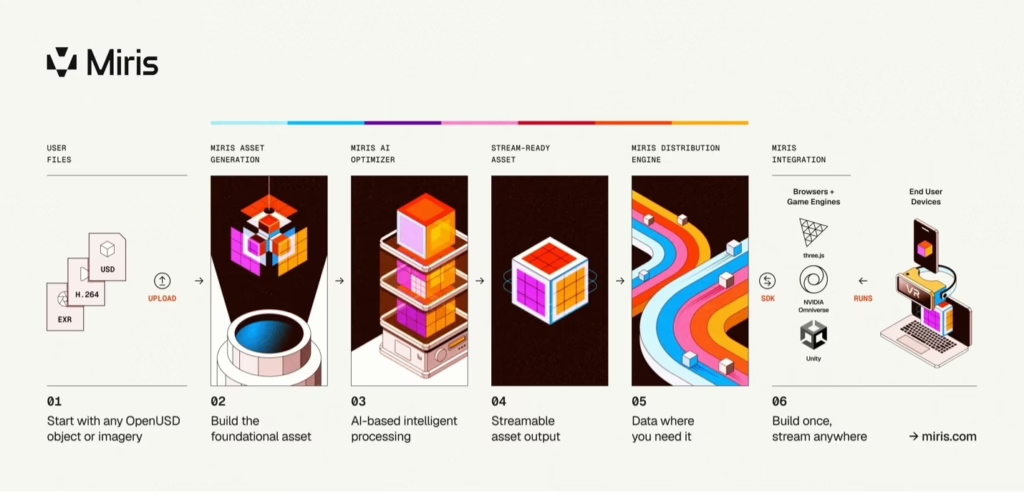
Miris applies the same paradigm shift to 3D that adaptive streaming brought to video. It streams spatial data that renders immediately and refines progressively as more data arrives. While actual costs haven’t yet been revealed, Miris has indicated that pricing will be comparable to video. Use cases include retail product configurators, architectural visualization, digital twins, and interactive retail, among others.
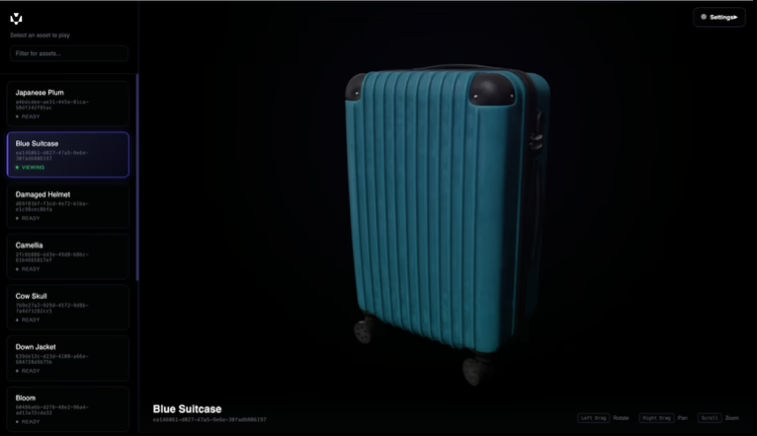
Public beta features include:
- Sub-second load times for complex 3D assets—Even a 500 MB product model loads and responds as quickly as a simple 5 MB scene.
- High visual fidelity without massive client downloads—Only necessary geometric and texture data are transmitted, enabling real-time delivery.
- Internet-scale without per-user GPU costs—Since edge GPUs are not needed for every concurrent user, the architecture scales without additional infrastructure costs,supporting lower total cost of ownership compared to pixel streaming.
Developers with beta access can use Miris with sample assets or their own content. The beta features detailed documentation for integration and is designed to be self-serve. Sign-ups for the public beta here.
WHAT DO YOU THINK? LIKE THIS STORY? TELL YOUR FRIENDS, TELL US.